
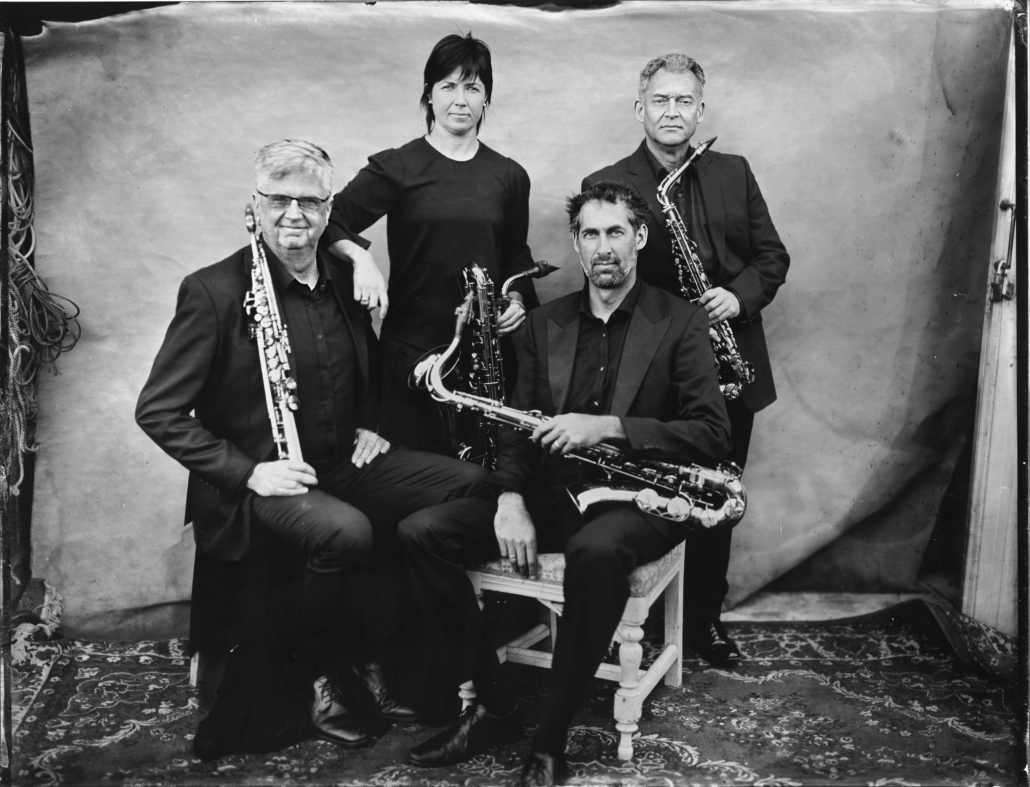
Founded in 2018, AXES Quartet is an internationally renowned saxophone quartet instigated by saxophonist Niels Bijl. The ensemble has always pushed the envelope for developing new music and promoting the rich history of saxophone quartet literature, through international collaboration with outstanding performing artists.
Currently the AXES Quartet is based in Victoria, Australia and is driven by the endless enthusiasm and experience of some of Australia’s finest saxophonists: Sara Beale (Wonthaggi), Shannon Ebeling (Geelong), Michael Lichnovsky (Bendigo) and Niels Bijl (Yarragon South).
Four Saxophones: A Harmonious Journey Through Time
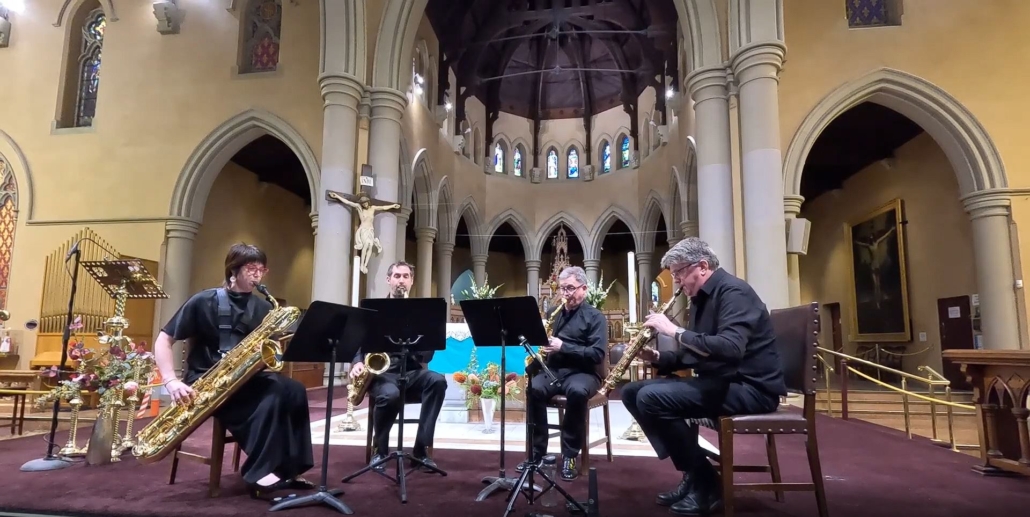
Caryl Florio (1843 – 1920)
Quartette: Allegro de Concert (1879)
This work is widely regarded as one of the earliest original works for saxophone quartet, written just decades after Adolphe Sax’s invention of the instrument and the one of the first American compositions for this chamber format. The work blends Romantic-era expressiveness with the formal clarity of classical chamber music. Listeners will hear lively interplay between the voices, virtuosic flourishes, and a sweeping, confident melodic style. Though it predates the saxophone’s mainstream acceptance in classical music, Florio’s quartet anticipates the instrument’s potential as both lyrical and agile.
César Franck (1822 – 1890)
Prélude, Fugue et Variations, op. 18 (1862)
Following a similar trajectory to the inventor of the saxophone, Adolphe Sax, César Franck was also born in Belgium and moved to Paris in search of musical greatness. César soon proved to be extremely talented not just as a composer, but especially as an organist with his improvisations after church services being major public events. He wrote down one of his most cherished improvisations as Prelude, Fugue, and Variation, Op. 18, a homage to one of his teachers, Camille Saint-Saëns. The opening has a Bach-like quality with the subsequent fugue beautifully constructed and in the last part you can clearly hear that the first melody was perfectly constructed to make room for a virtuosically flowing improvisation. The transcription you will hear this afternoon is written by Remco Jak, soprano saxophonist of the Amstel Quartet (the Netherlands)
Jean Francaix (1912 – 1997)
Petit Quatour (1935)
I. Guagenardise
II. Cantilène
III. Sérénade Comique
Before 1935, only a few composers had written for what is now known as the standard saxophone quartet of soprano, alto, tenor, and baritone saxophones. Jean Francaix’s Petit Quatour, written when he was just 23, was written for this relatively newly established chamber ensemble and has become a standard in the literature. The piece is a musical portrait of a lively Paris in the 1930’s. The Guagenardise is full of dynamic contrasts, and its uncomplicated dance rhythm is reminiscent of the cancan. The Cantilène is notable for its lack of high tessitura with the soprano saxophone omitted for this movement and featuring the alto saxophone with a singing melody. The final movement, Sérénade Comique, contrasts a jocular primary theme in the tenor saxophone with a rhythmic hemiola and plenty of sudden dynamic shifts.
Samuel Barber (1910 – 1981)
Adagio from String Quartet, op. 11 (1936)
Not long afterward the premiere of this string quartet, Barber sent a version of the Adagio, arranged in seven parts for string orchestra, to Arturo Toscanini. The esteemed conductor premiered the work with the newly formed NBC Symphony Orchestra and the piece was immediately successful. It is now one of the recognisable works in music history, making Barber one of the greatest American composers of all time. This version of the Adagio is transcribed for saxophone quartet as a homage to both the composer and composition, highlighting the sonorous qualities of the saxophone as well as its ability to blend like string instruments.
Fernande Decruck (1896 – 1954)
Pavane (1933)
The Pavane is a brief yet evocative work, inspired by the stately Renaissance dance form. Rather than a literal revival, Decruck offers a poetic reflection—elegant, restrained, and full of expressive nuance. The four saxophone parts are treated with equal care, blending into a warm, cohesive texture. The music unfolds gently, with flowing melodic lines and impressionistic harmonies that recall the coloristic style of early 20th-century French composers. Subtle modal shifts and delicate phrasing lend the piece a timeless quality—at once formal and dreamlike.
Ástor Piazzolla (1921 – 1992)
Fuga y misterio (1968)
This short instrumental work is from an operita composed by Piazzolla, María de Buenos Aires, in which classical contrapuntal techniques learned from Nadia Boulanger are flavoured with the tango style. The fugue begins with an agitated solo alto saxophone which is later joined by the other voices, each presenting the subject in its entirety. The ‘mystery’ is slow and sensual, using thematic material from the main character of the opera before dissolving away and returning for one final dance.
Alfred Desenclos (1921 – 1971)
Quatuor pour Saxophones, II. Andante (1964)
A cornerstone of the saxophone chamber repertoire, this quartet is praised for its lush harmonies, intricate counterpoint, and refined lyricism. This second movement serves as the emotional heart of the work, opening with a long, flowing melody passed between voices, evoking a sense of quiet introspection. Moments of tender simplicity alternate with more harmonically intense passages, creating a sense of ebb and flow.
Michael Torke (b. 1961)
July (1995)
This work takes the rhythmic percussion grooves from popular music and utilises a pitch framework to create an energetic work with lyrical melodies. Contrasting themes and moods are melded in a single movement work that evokes a wide range of impressions. The composition corresponds to an experience of time – the energy and heat found in the Northern hemisphere month of July, as well as cooling breezes of repose that come, perhaps, in the evening.
Celestial Cravings

Humanity’s greatest desire is a craving for celestial peace.
It is therefore also the driving force behind all conflict, drama and tragedy.
Dutch ‘avant pop’ composer JacobTV (Jacob ter Veldhuis, 1951) is considered an ‘outlaw’ in new music, whose work ‘makes many a hip-hop artist look sedate’ (Wall Street Journal).
Jacob has been a frontrunner in combining video, multimedia and music for 30 years. With his use of soundbites from documentaries, news items and popular tv-shows he displays a strong affinity with 21st century societal issues such as tragedy, consumerism, substance abuse and international conflict.
The Garden of Love (featuring Niels Bijl)
NUTS (World Premiere)
Grab it (featuring Shannon Ebeling)
Postnuclear Winter Scenario
Pimpin’ (featuring Sara Beale)
Heartbreakers